AI Cyber Defenders: Who's the Real Hero?
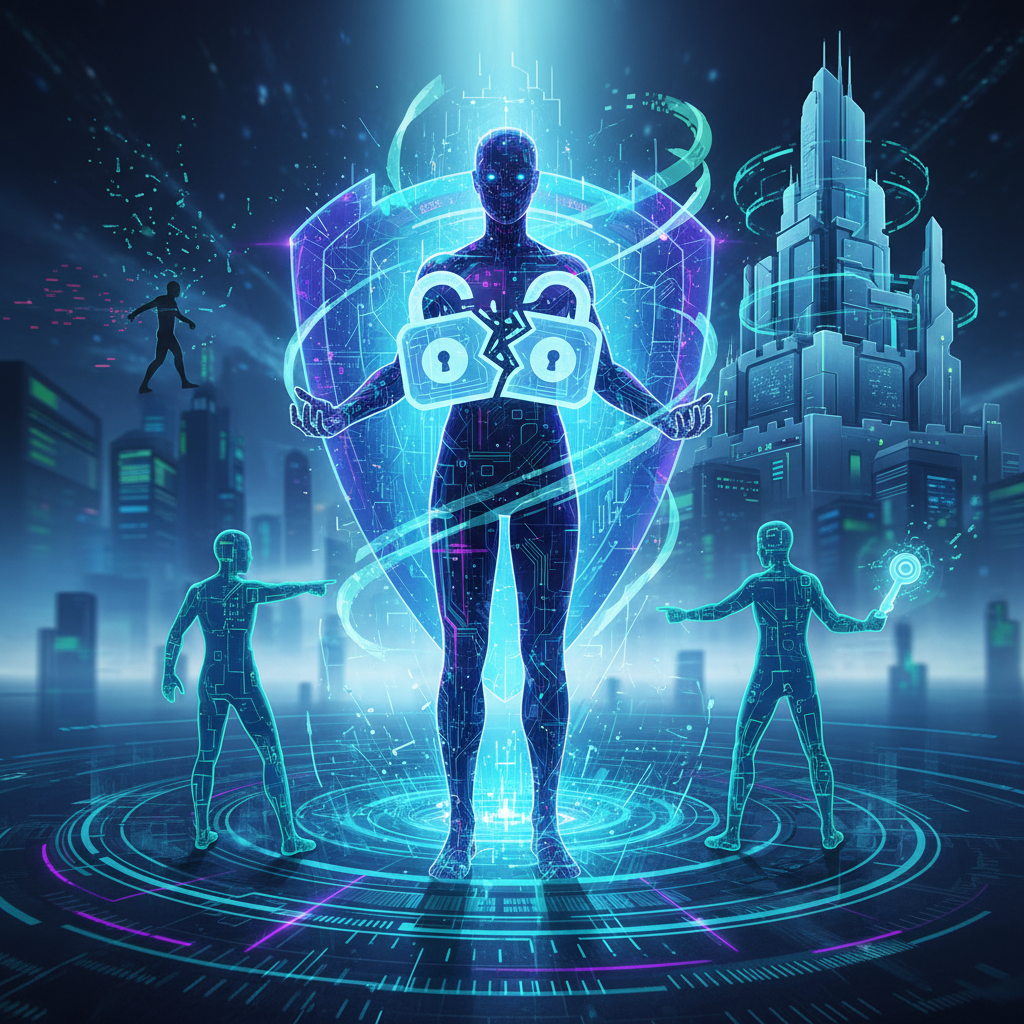
Ethical AI Hackers
Sophisticated AI models designed to find vulnerabilities and strengthen cybersecurity defenses, working for good.

Human Cybersecurity Experts
The veteran defenders with years of experience, intuition, and ethical judgment in the ever-evolving cyber battleground.
Cast your vote
Too close to call
Both AI Cyber Defenders and Human Cybersecurity Experts play crucial roles in the ongoing battle against cyber threats. While AI offers unparalleled speed and scalability, human experts bring critical thinking, adaptability, and ethical judgment to the table. The true hero likely lies in their collaboration.
The metrics that matter
Speed & Scale of Analysis
Excellent - AI can analyze vast datasets and identify patterns at speeds impossible for humans.
Good - Humans are limited by processing power and time, but can focus on specific areas efficiently.
Adaptability to Novel Threats
Good - AI can learn and adapt to new threats, but often requires training data and might struggle with truly novel attacks without human input.
Excellent - Humans possess intuition and creativity, allowing them to devise solutions for unprecedented cyber attacks.
Ethical Decision-Making
Fair - AI operates based on programmed rules and data, and while it can be guided by ethical frameworks, true ethical judgment remains a human domain.
Excellent - Humans are inherently capable of ethical reasoning, understanding context, and making nuanced judgments in complex situations.
Cost-Effectiveness (Long Term)
Potentially Excellent - Once developed and deployed, AI can offer significant long-term cost savings by automating tasks and scaling effortlessly.
Good - Human experts require continuous training, salaries, and benefits, which can be substantial but are necessary for critical thinking.
Understanding Human Intent
Poor - AI struggles to understand the underlying human motivations and psychological aspects of cyber attackers.
Excellent - Human experts can leverage their understanding of human behavior to anticipate and counter social engineering and other intent-based attacks.
Ethical AI Hackers
Pros
- Unmatched speed and efficiency in threat detection and vulnerability scanning.
- Ability to process and analyze massive amounts of data continuously.
- Automates repetitive tasks, freeing up human experts for more complex issues.
- Scales easily to protect large and complex networks.
Cons
- Lacks true intuition and ethical judgment, relying on programmed rules.
- Can be susceptible to adversarial attacks or biases in training data.
- May struggle with entirely new or 'zero-day' exploits without prior exposure.
Human Cybersecurity Experts
Pros
- Possesses critical thinking, intuition, and creative problem-solving skills.
- Capable of ethical decision-making and understanding human intent.
- Highly adaptable to novel and unforeseen cyber threats.
- Can interpret nuanced context and adapt strategies in real-time.
Cons
- Limited by human speed, processing power, and availability.
- Can be prone to human error, fatigue, and burnout.
- High operational costs due to salaries, training, and benefits.
- May struggle to analyze vast datasets as efficiently as AI.
Neither side is an undisputed 'hero' in isolation. Ethical AI hackers excel at the heavy lifting of data analysis, speed, and scale, which are crucial for modern cybersecurity. However, human cybersecurity experts bring indispensable qualities like intuition, ethical judgment, and the ability to adapt to truly novel threats, which AI currently lacks. The most effective cybersecurity strategy involves a symbiotic relationship where AI handles routine and high-volume tasks, augmenting human capabilities, while humans provide oversight, strategic direction, and critical ethical judgment.
AI verdicts are opinion, not fact. Your vote counts more.
Debate (0)
Loading…