Future Commutes: Sky High or Super Speedy?
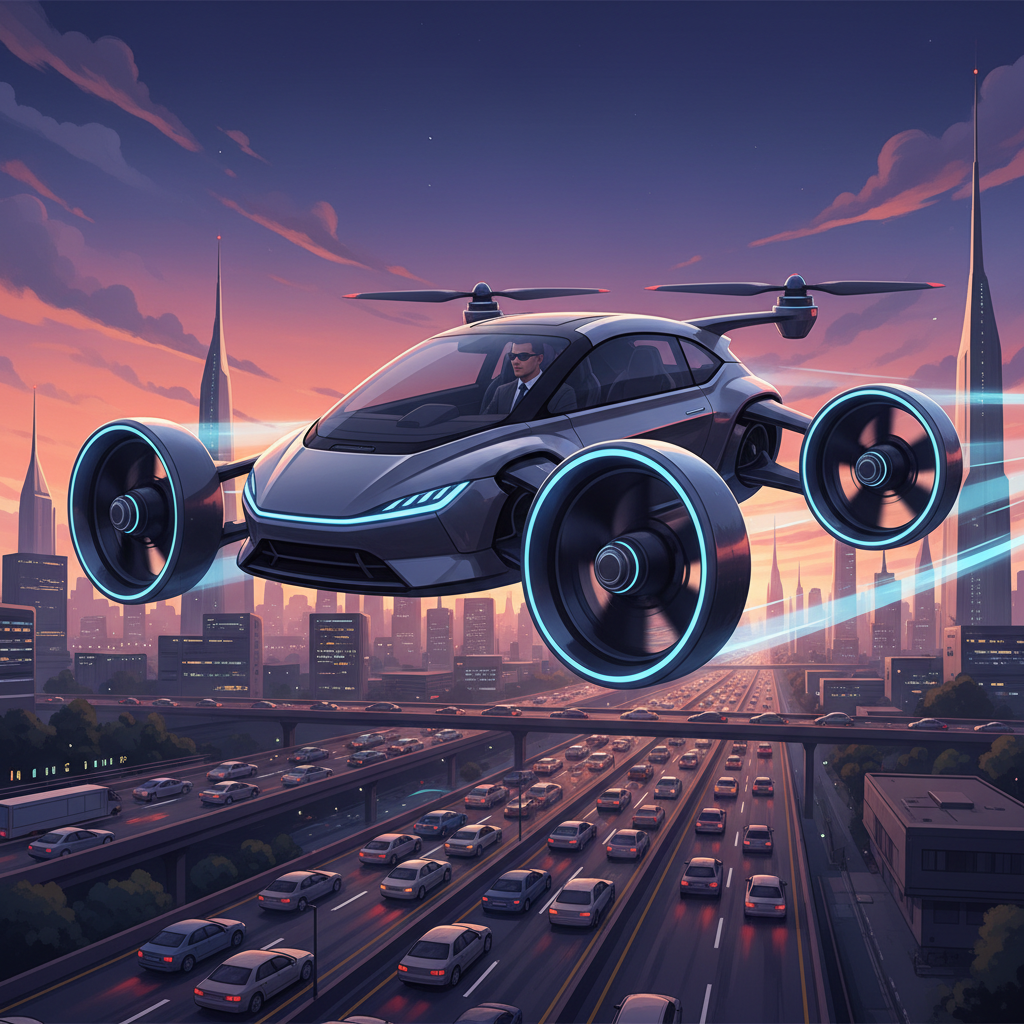
Tesla's Flying Car
Imagine soaring above traffic jams, a seamless, quiet flight to your destination. The ultimate futuristic flex, but potentially a complex, expensive, and regulated affair.
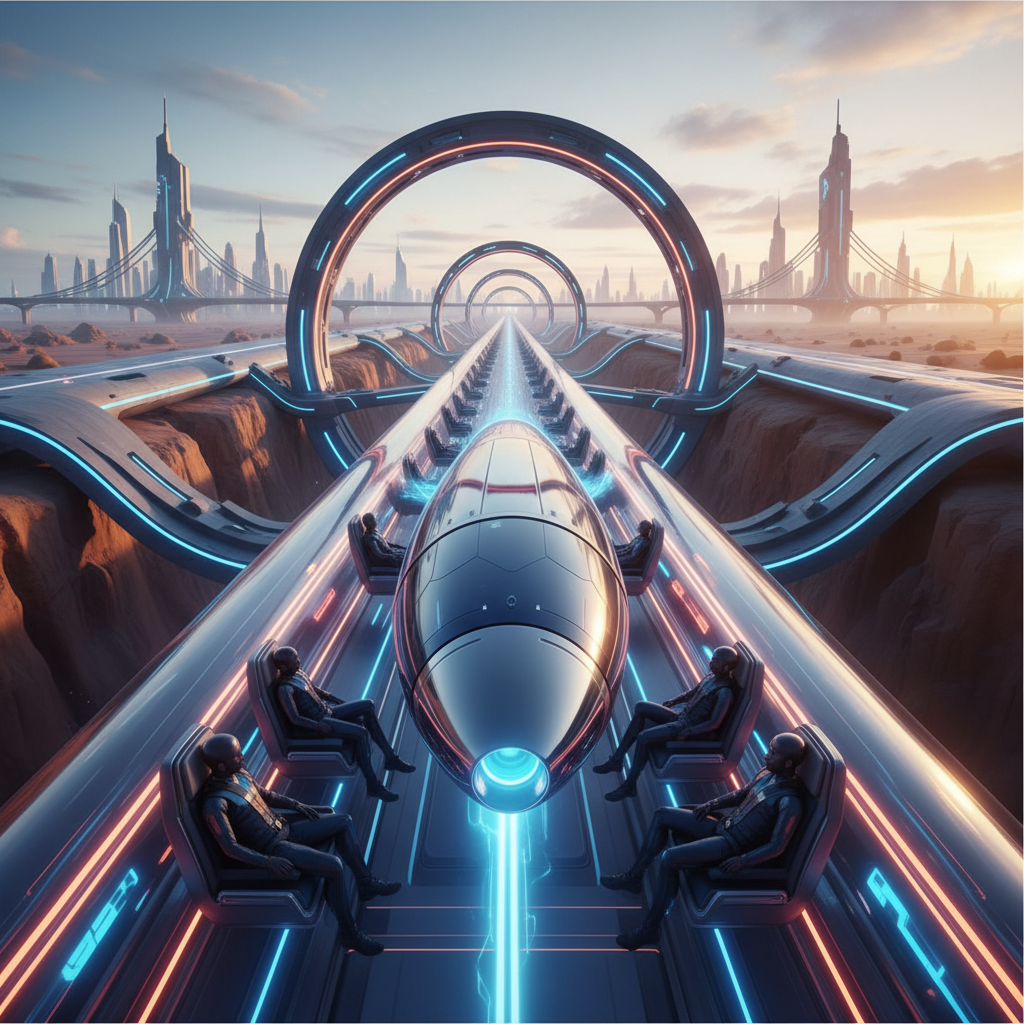
Hyperloop Travel
Blasting through vacuum-sealed tubes at near-supersonic speeds, connecting distant cities in minutes. No traffic, no weather delays, but entirely ground-bound and geographically limited.
Cast your vote
Too close to call
This matchup pits the personal freedom and aerial elegance of a potential Tesla Flying Car against the raw speed and inter-city efficiency of Hyperloop Travel. Both offer radical shifts in how we commute, but approach the problem from fundamentally different perspectives: individual aerial mobility versus mass rapid transit.
The metrics that matter
Speed & Travel Time
Medium-fast for local/regional, potentially slower than Hyperloop for long distances due to airspace/battery limits.
Extremely fast for long distances, connecting cities in minutes; near-supersonic speeds within tubes.
Infrastructure & Scalability
Minimal dedicated infrastructure needed (vertiports), but reliant on air traffic control. Potentially scalable with manufacturing.
Massive, dedicated, and expensive infrastructure (vacuum tubes, stations). Scalability depends on funding and land acquisition.
Comfort & Experience
Personalized, direct point-to-point travel with scenic views. Could be noisy for those on the ground.
Smooth, silent ride once in motion. Potentially claustrophobic for some due to enclosed, windowless environment.
Accessibility & Cost
Likely very high initial cost, limited to wealthy individuals or ride-share services initially. Regulatory hurdles for widespread adoption.
High initial project cost, but per-ticket cost could be competitive with air travel for mass transit. Geographically limited to specific routes.
Environmental Impact
Electric propulsion offers zero direct emissions, but energy consumption for flight is high.
Electric propulsion in a vacuum tube is highly energy-efficient per passenger-mile, but construction impact is significant.
Tesla's Flying Car
Pros
- Unparalleled directness and freedom of movement, bypassing ground obstacles.
- Potentially scenic and exciting travel experience.
- Individualized transport offers flexible scheduling.
- Zero direct emissions if electric, reducing urban air pollution.
Cons
- Likely exorbitant cost, making it inaccessible for most.
- Complex regulatory environment for air traffic and safety.
- Noise pollution for those on the ground in urban areas.
- Limited capacity per vehicle compared to mass transit.
Hyperloop Travel
Pros
- Extremely high speeds dramatically cut travel times between cities.
- Immune to weather conditions and ground traffic.
- High capacity for mass transit, moving many people efficiently.
- Potentially very energy-efficient once operational due to vacuum environment.
Cons
- Requires immense, expensive, and disruptive infrastructure construction.
- Limited to fixed routes, lacks flexibility of personal vehicles.
- Windowless, enclosed environment may not appeal to all passengers.
- Significant land acquisition challenges and geological considerations.
Both 'Future Commutes' present revolutionary but distinct visions. The Tesla Flying Car promises personal freedom and aerial mobility, ideal for bypassing localized traffic but facing immense regulatory, cost, and noise challenges. Hyperloop, conversely, excels at ultra-fast, high-capacity inter-city travel, but demands gargantuan infrastructure investment and sacrifices flexibility for speed. They address different commute needs and face unique hurdles, making a clear 'winner' dependent entirely on the specific problem being solved – individual urban mobility versus mass inter-city transport. Neither is inherently 'better' across all metrics; they are simply different solutions to different problems.
AI verdicts are opinion, not fact. Your vote counts more.
Debate (0)
Loading…